
ENG: Day 2 - 18 March - OC-33 Advisory Opinion on Democracy
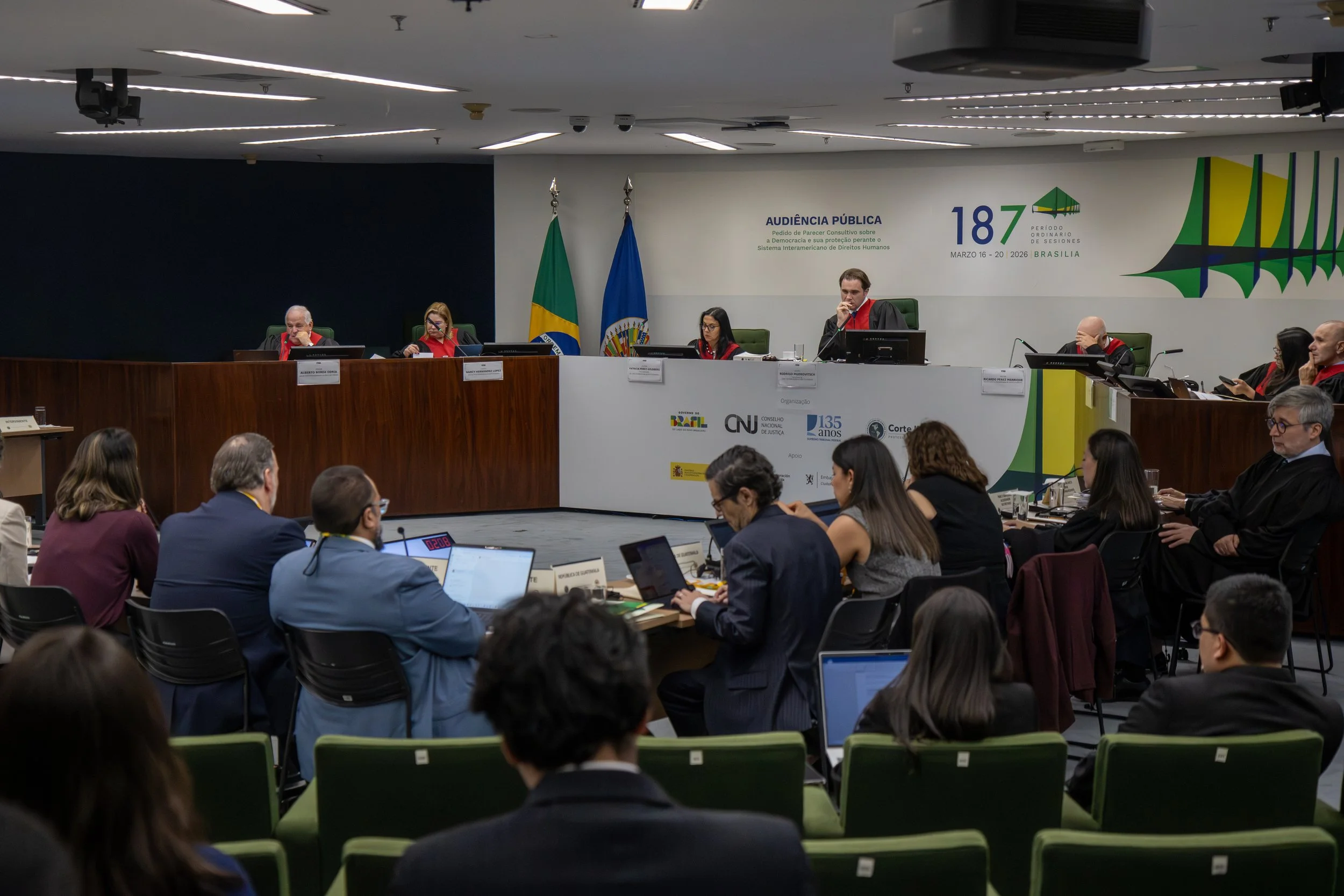
Foto por Ester Vargas, flickr CorteIDH
Yesterday, March 18th 2026, marked the second day of the public hearings taking place in Brasília before the Inter-American Court of Human Rights regarding an advisory opinion on Democracy and its protection under the Inter-American system of human rights protection – a request made by the State of Guatemala.
During this second day, a total of 37 oral statements were made in front of the court by a wide range of actors, such as public defenders offices, non-governmental organisations, academic institutions, research centers, law clinics, and individuals. The full list of interventions can be found here.
While the amount of themes, rights, and arguments was incredibly broad and cannot be comprehensively discussed within this post, below is a short recap of some of the arguments presented:
The day was marked by a broad consensus that democracy constitutes a human right within the Inter-American system of human rights protection. The nature of the right was described as autonomous, complex, individual and collective, transversal, structural, and erga omnes, amongst others. Indeed, participants, such as the Observatorio del Sistema Interamericano de Derechos Humanos del Instituto de Investigaciones Jurídicas de la UNAM, drew from the OAS Charter, the American Convention on Human Rights, and the Inter-American Democratic Charter to establish democracy as a human right in its own right.
Participants advanced varied interpretative avenues to ground the existence of a human right to democracy in the Inter-American System including recognizing democracy as a norm of regional customary international law and even a regional jus cogens norm; the integration of the essential nuclei of rights explicitly recognized in the convention with an intimate connection to the democratic system; Angel Gabriel Cabrera Silva and Sahib Singh defended a derivation of the right through article 26 ACHR as a right with a profound connection with the social, economic and political development of the people of the américas among others.
Once again, participants overwhelmingly established that democracy, the rule of law, and the protection of human rights are inseparable. The Núcleo de Direitos Humanos - PUC Minas further described democracy as essential for the realization of the human condition and the maintenance of one’s humanity.
The Defensoria Pública-Geral da União urged that our understanding of democracy must not be reduced to the rule of the majority. Instead, democratic regimes have the duty to confront the structural inequality of society that impedes the exercise of rights and protection of minorities: equality is a necessary, legitimizing element for any democracy regime. This understanding of democracy was supported by a high number of statements, many of which highlighted that an essential component of democracy is the protection of minorities and vulnerable groups, such as indigenous peoples, women, and the LGBTQ+ community, and requires effective measures to include populations historically excluded from public power in the constitutional space.
Essential themes and substantive aspects of the right’s content included, inter alia, separation of powers and limits to power, access to information, freedom of expression, equality and non-discrimination, judicial independence, peaceful gathering, effective political rights, economic, social, environmental, and cultural rights, education, academic freedom, university autonomy, freedom of association,political rights, guarantees of political pluralism, independence of electoral bodies, the right to protect rights, and access to justice.
A particularly noteworthy number of statements stressed that upholding environmental democracy was imperative for the effective protection of another baseline condition for the enjoyment of all human rights: the environment and the natural world. In this context, the guarantee of environmental procedural rights, access to justice, access to information, and public participation, were, thus, indispensable.
Among the threats to democracy participants highlighted the use of formal constitutional mechanisms for antidemocratic ends, misinformation, environmental racism, technology and the digital world, private corporations, attacks on academic freedom and poverty, among others. Global Rights Advocacy further highlighted that democratic erosion formed a gradual process and Colombia’s Public Defense Office warned that a denial of the inherently democratic character of human rights would open the door to constitutional arrangements in opposition to the human rights framework and, inevitably, a regression of the Inter-American system of human rights protection.
Regarding possible reparations for a violation of the right to democracy, Global Rights Advocacy introduced the concept of civic/structural harm and the need for collective, rather than solely individual, reparations, including restitution, structural reforms, guarantees of non-repetition, and reparations for civic harm.
Judges’ questions asked participants to deliberate the precise content of the right to democracy and ensuing obligations for States, the possible ius cogens nature of the right, the rights’ impact on the right to self-determination.
Follow NIKA on our socials to stay in the loop on the developments in the public hearings for AO-33.
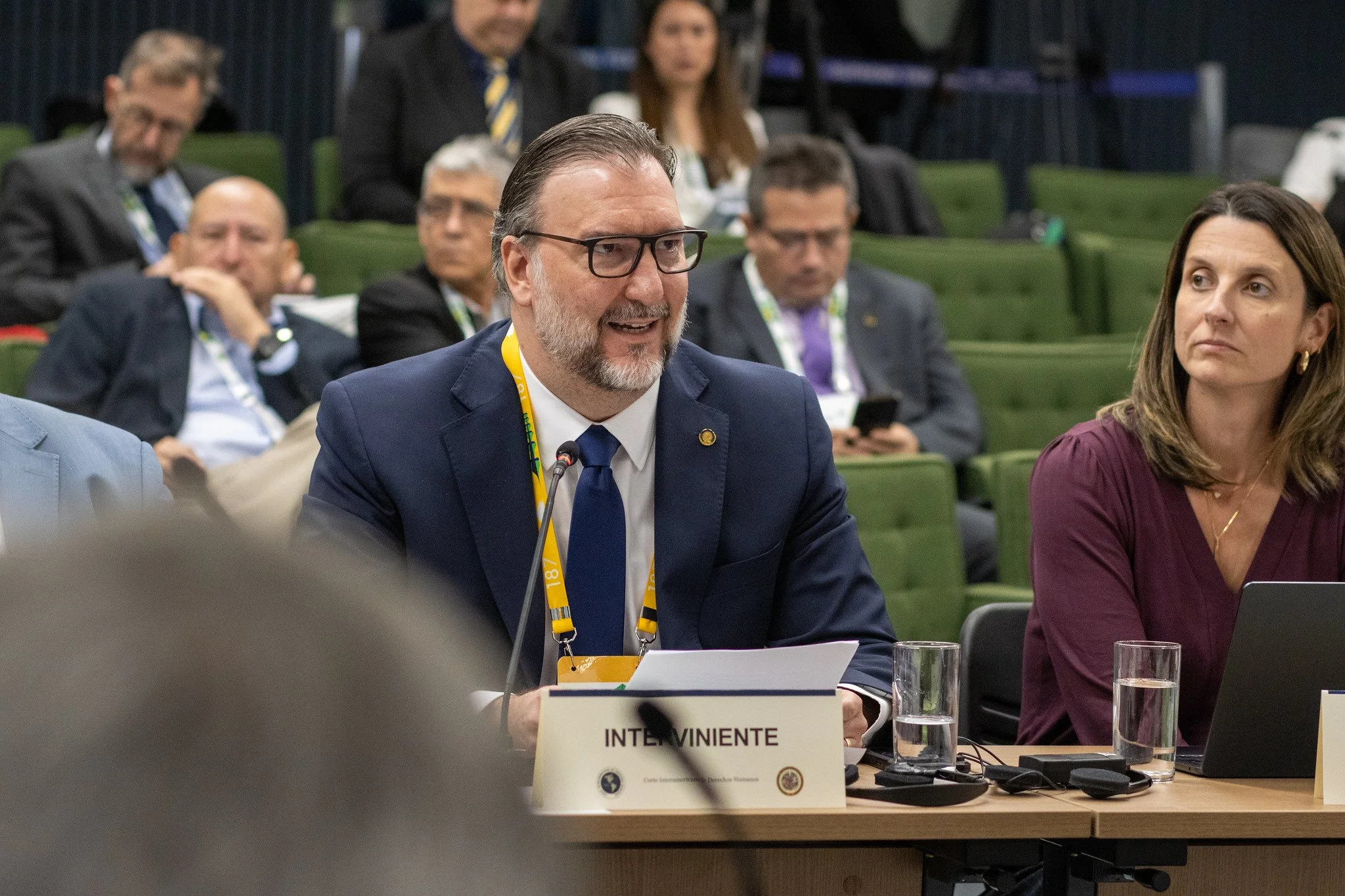
Foto por Ester Vargas, flickr CorteIDH
